
Do You Need Travel Insurance for the UK?
Travel insurance is not a legal requirement for entering the United Kingdom. Unlike some countries that mandate health coverage as a visa condition, the UK does not require visitors to show proof of travel insurance at the border. However, not having it is a significant financial risk.
The UK’s National Health Service (NHS) provides free healthcare to residents, but international visitors are not covered by the NHS. If you fall ill, have an accident, or need emergency treatment during your trip, you will be expected to pay out-of-pocket — and those costs can be staggering.
Consider these real-world examples of medical costs abroad without insurance:
| Situation | Estimated Cost Without Insurance |
|---|---|
| Fall and break a leg — hospital treatment + possible evacuation | £25,000+ |
| Surgery and medical evacuation after an accident | £80,000+ |
| Stomach infection requiring hospital treatment + evacuation | £150,000+ |
Beyond medical emergencies, travel insurance protects you against trip cancellations, lost luggage, flight delays, and other disruptions that are common when travelling internationally. Given the UK is a major long-haul destination for many travellers, the cost of a policy is a small price compared to the potential financial exposure.
Bottom line: While no one will ask to see your travel insurance policy at UK border control, travelling without one puts you at serious financial risk. It is strongly recommended by the UK government, the Foreign, Commonwealth & Development Office (FCDO), and every major travel advisory service.
What Does UK Travel Insurance Cover?
A comprehensive UK travel insurance policy typically bundles several types of protection. Understanding each component helps you choose a plan that matches your trip and risk profile.
Emergency Medical Expenses
This is the most critical part of any travel insurance policy. Emergency medical coverage pays for hospital stays, doctor visits, ambulance transport, prescription medication, and emergency dental treatment.
- Recommended minimum: $50,000 in emergency medical coverage
- For older travellers or those with pre-existing conditions: $100,000 or more
- Medical evacuation: At least $250,000 — evacuations are extremely expensive, especially repatriation flights with medical staff
Without this coverage, even a minor accident requiring an A&E visit could cost hundreds or thousands of pounds. A serious incident could bankrupt you.
Trip Cancellation and Interruption
If you need to cancel your trip before departure — due to illness, a family emergency, or other covered reasons — trip cancellation insurance reimburses your non-refundable expenses such as flights, hotel bookings, and prepaid tours.
Trip interruption coverage kicks in if you need to cut your trip short for a covered reason. It can refund unused portions of your trip and cover the cost of a last-minute return flight.
- Typical coverage: 100% of trip cost for cancellation, 150% for interruption
- Common covered reasons: Illness, injury, death in the family, jury duty, natural disasters
Many UK-bound travellers book expensive theatre tickets in London’s West End, guided tours of historical sites, and rail passes — all of which are often non-refundable. Cancellation coverage protects these investments.
Baggage Loss and Delay
Baggage coverage reimburses you if your checked luggage is lost, stolen, or damaged during transit. Delayed baggage coverage pays for essentials — clothing, toiletries, medication — if your bags don’t arrive when you do.
- Typical coverage: $500-$2,500 for loss/damage; $100-$300 for delays over 12-24 hours
- UK-specific note: Pickpocketing and phone snatches are on the rise in major UK cities. Look for policies that cover personal belongings theft, not just airline baggage issues.
Travel Delay and Missed Connections
If your flight or train is delayed beyond a specified threshold (usually 6-12 hours), travel delay coverage reimburses additional expenses like meals, accommodation, and transportation.
The UK’s major airports — Heathrow, Gatwick, Manchester — are busy international hubs where delays and cancellations happen, especially during winter weather and peak summer travel. Rail strikes are also a recurring disruption in the UK.
Repatriation
Repatriation coverage pays for your return home if you suffer a serious medical emergency or, in the worst case, death abroad. Medical repatriation flights with accompanying medical staff can cost £10,000 or more. This is typically included in the emergency medical component of a comprehensive policy.
How Much Does UK Travel Insurance Cost?
The cost of travel insurance for a UK trip depends on several factors:
| Factor | Impact on Price |
|---|---|
| Age | Older travellers pay more — premiums rise significantly after 50 |
| Trip length | Longer trips cost more to insure |
| Trip cost | Higher prepaid costs mean higher cancellation coverage premiums |
| Coverage level | Comprehensive plans cost more than basic medical-only policies |
| Pre-existing conditions | Can increase premiums or require specialist providers |
Based on industry data, travellers spend around $300 on average for travel insurance when visiting the United Kingdom. However, budget policies covering only emergency medical expenses can start from as little as $20-$50 for a short trip.
Cost-saving tips:
- Buy insurance as soon as you book your trip — you get cancellation protection from day one
- Compare quotes from multiple providers rather than buying the first policy you see
- Annual multi-trip policies are cheaper if you visit the UK more than once a year
- Consider a higher excess (deductible) to lower your premium
- Check if your credit card includes any travel insurance benefits
Choosing the Right Policy
Not all travel insurance policies are equal. Here is how to evaluate your options and find the right fit.
Step 1: Assess your needs. A solo weekend city break to London has very different insurance needs than a three-week family tour of England, Scotland, and Wales. Consider:
- Trip cost and number of non-refundable bookings
- Your age and health status
- Activities you plan to do (hiking, skiing, adventure sports)
- Whether you are travelling with valuables
Step 2: Compare policy components. Focus on these key areas:
- Emergency medical limit (minimum $50,000, ideally $100,000+)
- Medical evacuation limit ($250,000+)
- Trip cancellation limit (match your total prepaid trip cost)
- Baggage coverage (enough to replace essential items)
- 24/7 emergency assistance hotline
Step 3: Read the exclusions. Every policy has exclusions. Common ones to watch for:
- Pre-existing medical conditions not declared
- Activities considered “high risk” (skiing, bungee jumping, jet skiing)
- Incidents related to excessive alcohol consumption
- Travel to destinations where the FCDO advises against travel
Step 4: Use comparison tools. Websites like Comparethemarket, MoneySupermarket, and GoCompare let you compare quotes from dozens of UK-authorised insurers side by side.
UK Travel Insurance for Different Visitor Types
US Citizens
US health insurance, including Medicare, is not accepted in the UK. The NHS is a publicly funded system for UK residents only. US visitors should ensure their policy includes:
- At least $100,000 in emergency medical coverage
- Medical evacuation back to the United States
- Coverage for pre-existing conditions if applicable
The US Department of State rates the UK at Level 2: Exercise Increased Caution due to terrorism threats. This does not affect insurance validity but is worth knowing when choosing coverage.
EU/EEA Citizens
EU citizens can use their European Health Insurance Card (EHIC) or UK Global Health Insurance Card (GHIC) for medically necessary state-provided healthcare in the UK. However, EHIC/GHIC is not a substitute for travel insurance. It does not cover:
- Private healthcare or hospitals
- Repatriation costs
- Trip cancellation, baggage, or travel delay
- Mountain rescue or adventure sports injuries
A comprehensive travel insurance policy fills these gaps.
Visa Holders and ETA Applicants
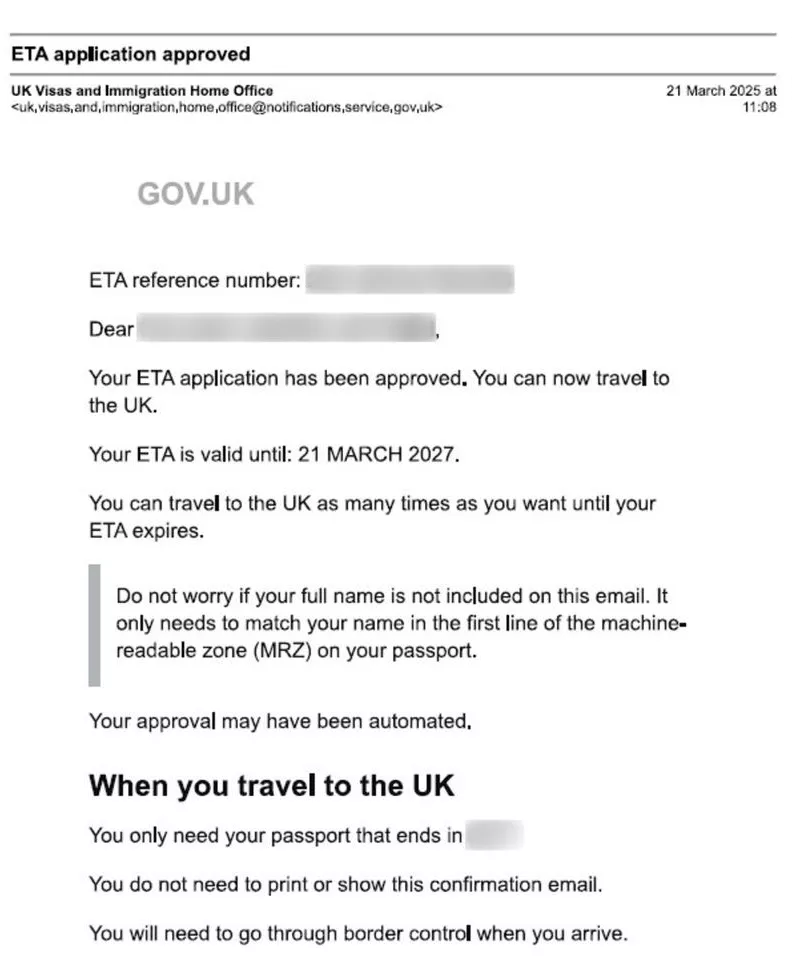
If you are applying for a UK ETA or hold a UK tourist visa, travel insurance is not part of the application requirements. The UK ETA requirements focus on passport validity and eligibility, not insurance.
However, some visa types — particularly long-term work or study visas — may have conditions around healthcare. Student visa holders, for example, pay the Immigration Health Surcharge (IHS) as part of their application, which grants NHS access during their stay.
For short-term visitors on an ETA or standard visitor visa, travel insurance remains your only financial safety net for medical emergencies and trip disruptions.
What Is Not Covered? Common Exclusions
Understanding what travel insurance does not cover is just as important as knowing what it does. Common exclusions include:
- Pre-existing medical conditions — unless specifically declared and accepted by the insurer
- High-risk activities — bungee jumping, skydiving, jet skiing, and winter sports often require add-ons
- Alcohol and drug-related incidents — claims arising from excessive intoxication are almost universally excluded
- FCDO advisory destinations — travelling to a location the FCDO advises against invalidates most policies
- Undeclared mental health conditions — you must disclose these at purchase time
- Driving abroad — standard travel insurance does not cover car hire accidents; check your motor policy or buy separate hire car insurance
- Natural disasters and terrorism — many policies offer limited cover; some offer optional add-ons
- Age restrictions — some policies cap coverage at age 65 or 70; specialist providers exist for older travellers
Always read the policy wording carefully before purchasing. The small print defines what is and is not covered.